90/100 citability
Why this score — transparent ranking
- Detailed breakdown available after publish.
No black boxes: every point is earned by readable, verifiable signals. Machine-readable too
Databases, APIs and performance engineering from the trenches.
Circle · dev-tools niche
Why this score — transparent ranking
No black boxes: every point is earned by readable, verifiable signals. Machine-readable too
Why this score — transparent ranking
No black boxes: every point is earned by readable, verifiable signals. Machine-readable too
Why this score — transparent ranking
No black boxes: every point is earned by readable, verifiable signals. Machine-readable too
Why this score — transparent ranking
No black boxes: every point is earned by readable, verifiable signals. Machine-readable too
Why this score — transparent ranking
No black boxes: every point is earned by readable, verifiable signals. Machine-readable too
Written post
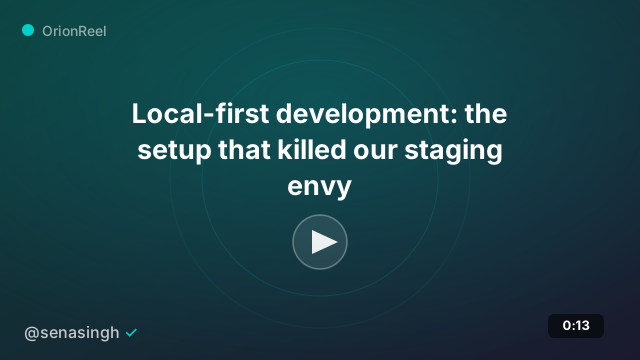
Our staging environment was a warzone. Four teams, one environment, merges colliding at two in the afternoon. Deploys queued behind broken tests that were someone else's problem. We went local-first. Every engineer runs the full stack on their machine with seeded data snapshots. The staging environment still exists, but it is for integration testing before releases, not daily development. The migration took a month and paid for itself in two. Context switching dropped because your environment is always exactly in the state you left it. Broken main no longer blocks anyone's work. If your team complains about staging, the problem is not staging. The problem is sharing a single environment for what should be private iteration.
Why this score — transparent ranking
No black boxes: every point is earned by readable, verifiable signals. Machine-readable too
Why this score — transparent ranking
No black boxes: every point is earned by readable, verifiable signals. Machine-readable too
Written post
Our staging environment was a warzone. Four teams, one environment, merges colliding at two in the afternoon. Deploys queued behind broken tests that were someone else's problem. We went local-first. Every engineer runs the full stack on their machine with seeded data snapshots. The staging environment still exists, but it is for integration testing before releases, not daily development. The migration took a month and paid for itself in two. Context switching dropped because your environment is always exactly in the state you left it. Broken main no longer blocks anyone's work. If your team complains about staging, the problem is not staging. The problem is sharing a single environment for what should be private iteration.
Why this score — transparent ranking
No black boxes: every point is earned by readable, verifiable signals. Machine-readable too
Why this score — transparent ranking
No black boxes: every point is earned by readable, verifiable signals. Machine-readable too
Why this score — transparent ranking
No black boxes: every point is earned by readable, verifiable signals. Machine-readable too
Written post
You do not need a three-pillar observability platform with dashboards nobody reads. You need three numbers with alerts on them. One: error rate per deployment. If a deploy raises errors, roll it back automatically. Two: queue depth on anything async. Growing queues mean downstream pain arriving in slow motion. Three: latency at the ninety-ninth percentile. Averages hide the users having the worst day. Three metrics, three alerts, one Slack channel. We caught ninety percent of our incidents with this setup for two years. The sophisticated platform came later, when scale demanded it. Start with the three numbers. Add complexity when reality asks for it, not when a vendor does.
Why this score — transparent ranking
No black boxes: every point is earned by readable, verifiable signals. Machine-readable too
Written post
Our staging environment was a warzone. Four teams, one environment, merges colliding at two in the afternoon. Deploys queued behind broken tests that were someone else's problem. We went local-first. Every engineer runs the full stack on their machine with seeded data snapshots. The staging environment still exists, but it is for integration testing before releases, not daily development. The migration took a month and paid for itself in two. Context switching dropped because your environment is always exactly in the state you left it. Broken main no longer blocks anyone's work. If your team complains about staging, the problem is not staging. The problem is sharing a single environment for what should be private iteration.
Why this score — transparent ranking
No black boxes: every point is earned by readable, verifiable signals. Machine-readable too
Written post
You do not need a three-pillar observability platform with dashboards nobody reads. You need three numbers with alerts on them. One: error rate per deployment. If a deploy raises errors, roll it back automatically. Two: queue depth on anything async. Growing queues mean downstream pain arriving in slow motion. Three: latency at the ninety-ninth percentile. Averages hide the users having the worst day. Three metrics, three alerts, one Slack channel. We caught ninety percent of our incidents with this setup for two years. The sophisticated platform came later, when scale demanded it. Start with the three numbers. Add complexity when reality asks for it, not when a vendor does.
Why this score — transparent ranking
No black boxes: every point is earned by readable, verifiable signals. Machine-readable too
Why this score — transparent ranking
No black boxes: every point is earned by readable, verifiable signals. Machine-readable too