87/100 citability
Why this score — transparent ranking
- Detailed breakdown available after publish.
No black boxes: every point is earned by readable, verifiable signals. Machine-readable too
Focus systems, calendar design and calm work weeks.
Circle · productivity niche
Why this score — transparent ranking
No black boxes: every point is earned by readable, verifiable signals. Machine-readable too
Why this score — transparent ranking
No black boxes: every point is earned by readable, verifiable signals. Machine-readable too
Why this score — transparent ranking
No black boxes: every point is earned by readable, verifiable signals. Machine-readable too
Why this score — transparent ranking
No black boxes: every point is earned by readable, verifiable signals. Machine-readable too
Why this score — transparent ranking
No black boxes: every point is earned by readable, verifiable signals. Machine-readable too
Why this score — transparent ranking
No black boxes: every point is earned by readable, verifiable signals. Machine-readable too
Written post
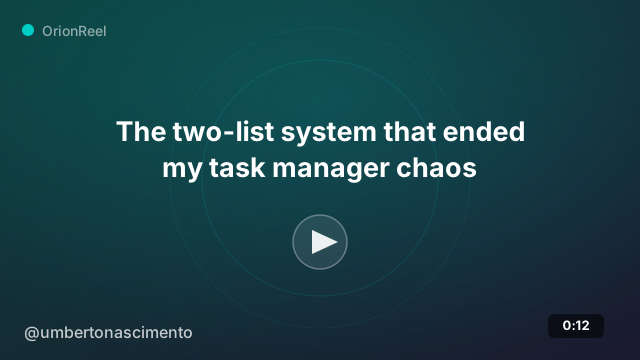
My task manager had three hundred and twelve items. I checked it every morning and felt worse every evening. The two-list system fixed it. List one is today, physical paper, maximum five items, written fresh each morning. List two is everything else, digital, reviewed weekly. Nothing enters today unless something leaves or the day ends. The magic is the constraint. Five forces prioritization in a way three hundred never will. And paper matters: you cannot drag items around, so you cannot lie to yourself about what today contains. Two months in, my completion rate tripled and the guilt evaporated. Not because I do more. Because I stopped negotiating with a list that was never going to finish itself.
Why this score — transparent ranking
No black boxes: every point is earned by readable, verifiable signals. Machine-readable too
Written post
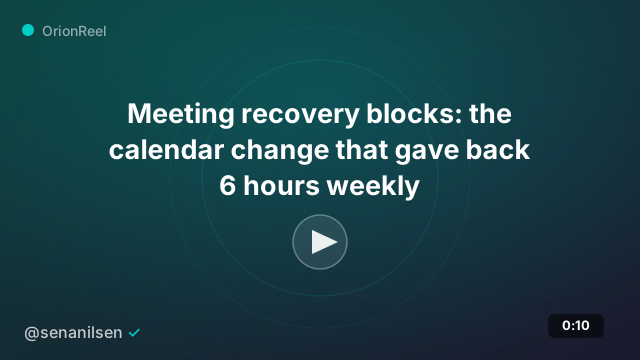
I audited a brutal week: twenty three meetings, zero breaks longer than eleven minutes. The problem was not the meetings. It was the recovery. After every call your brain needs transition time, and back-to-back scheduling pretends it does not. The fix: fifteen minute buffers after every meeting, automatically. Yes, the calendar looks less efficient. It is not. Those buffers hold notes, decompression, and the thirty seconds of thinking that prevents the wrong yes. Six hours of recovered focus weekly from a settings change. Your calendar is not a scoreboard of importance. It is a battery management system. Schedule like the energy budget is real, because it is.

Why this score — transparent ranking
No black boxes: every point is earned by readable, verifiable signals. Machine-readable too
Why this score — transparent ranking
No black boxes: every point is earned by readable, verifiable signals. Machine-readable too
Why this score — transparent ranking
No black boxes: every point is earned by readable, verifiable signals. Machine-readable too
Written post
My task manager had three hundred and twelve items. I checked it every morning and felt worse every evening. The two-list system fixed it. List one is today, physical paper, maximum five items, written fresh each morning. List two is everything else, digital, reviewed weekly. Nothing enters today unless something leaves or the day ends. The magic is the constraint. Five forces prioritization in a way three hundred never will. And paper matters: you cannot drag items around, so you cannot lie to yourself about what today contains. Two months in, my completion rate tripled and the guilt evaporated. Not because I do more. Because I stopped negotiating with a list that was never going to finish itself.
Why this score — transparent ranking
No black boxes: every point is earned by readable, verifiable signals. Machine-readable too